Recycling and Sustainability for Gardeners Longford
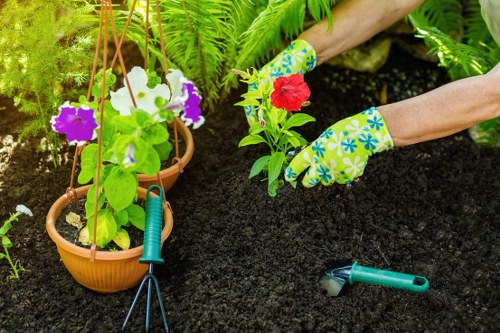 Gardeners Longford is committed to working in a way that supports a cleaner, more efficient local environment. From responsible green waste handling to thoughtful material separation, our approach to garden recycling is designed to reduce landfill use and improve resource recovery. By following local borough waste separation practices and using low-carbon transport, we help make garden maintenance more sustainable across the Longford area.
One of the main goals in our sustainability programme is to achieve a recycling percentage target of 85% across reusable and recyclable materials collected during garden jobs. That includes branches, cuttings, leaves, compostable organics, certain plastics, metal fixtures, and soil-related waste where it can be recovered properly. Rather than treating everything as general rubbish, our team separates materials so that more can be processed through the correct local channels.
 This matters in Longford because nearby boroughs and waste authorities often rely on distinct separation streams for green waste, mixed recyclables, and residual disposal. Our garden waste recycling practices are designed to align with these local systems, making it easier for material to move into composting, reuse, or specialist processing. We also keep an eye on seasonal waste patterns, as autumn leaf clearance and spring cutback work can create very different recycling needs.
To support this, Gardeners Longford makes use of local transfer stations and licensed waste facilities that can responsibly manage garden materials. These stations play an important role in sorting and routing waste, especially when larger or mixed loads need to be broken down before final treatment. By using approved transfer stations, we reduce unnecessary journeys and help ensure that recyclable materials are directed to the right recovery streams.
Our sustainability planning also includes careful separation of common garden outputs. For example, branches and woody material may be sent for chipping or biomass recovery, while softer green waste can be collected for composting. In some cases, soil, turf, and plant containers require different handling, so our team keeps materials apart where possible. This more selective approach supports a circular model and reflects the wider borough emphasis on sorting waste at source.
 We also work with local charities and community organisations to give certain items a second life where appropriate. Garden furniture, usable plant pots, surplus containers, hand tools, and decorative materials may be redirected through charity partnerships instead of being disposed of unnecessarily. These collaborations help extend the life of usable goods and support community reuse initiatives, turning surplus from a liability into a benefit.
Another important part of our environmental commitment is the use of low-carbon vans. Our vehicles are chosen to reduce emissions wherever possible, helping to lower the footprint of travel between sites, transfer stations, and collection points. Efficient routing also means fewer miles on the road, less fuel consumption, and a more responsible service overall. For a busy gardening service, that can make a meaningful difference over time.
Where practical, we use route planning that groups nearby jobs together, which cuts down on repeated journeys and supports lower emissions. This is especially helpful when working across different neighbourhoods with varying collection needs. The combination of efficient logistics and cleaner vans allows Gardeners Longford to deliver practical services while keeping sustainability at the centre of operations.
We also recognise that local waste policies continue to evolve. Across the boroughs, there is increasing attention on separating food waste, green waste, metal, cardboard, and plastics more carefully. That wider shift supports our own recycling effort, since garden maintenance often produces materials that fit into these categories or can be handled in parallel systems. By staying aligned with these approaches, we can contribute to the broader sustainability aims of the area.
 At the operational level, sustainability starts with planning. Our teams are trained to identify what can be recycled, what should be composted, and what must be disposed of through authorised routes. This includes recognising when mixed loads need additional sorting, especially after larger pruning or clearance work. The result is a more responsible process that keeps recyclable content out of the general waste stream wherever possible.
Our recycling-focused service also reflects the growing expectation that garden care should be environmentally aware. Clients increasingly value a service that is not only neat and efficient but also careful with resources. That is why our methods emphasise reuse, recovery, and low-impact disposal. Whether it is seasonal cuttings, old planting materials, or site-clearance debris, we treat each job with a view toward sustainable handling.
 In practical terms, Gardeners Longford aims to make every stage of garden work more sustainable, from collection through to final processing. With clear recycling targets, use of local transfer stations, charity partnerships, and low-carbon vans, our approach supports both the environment and the community. It is a simple idea with a meaningful result: less waste, more reuse, and a greener Longford for the future.